How Approved Deposit Channels Shape Multi-Table Success Patterns in Switzerland's Regulated Digital Card Rooms
Geschrieben von Anna Simon · 28.10.2026
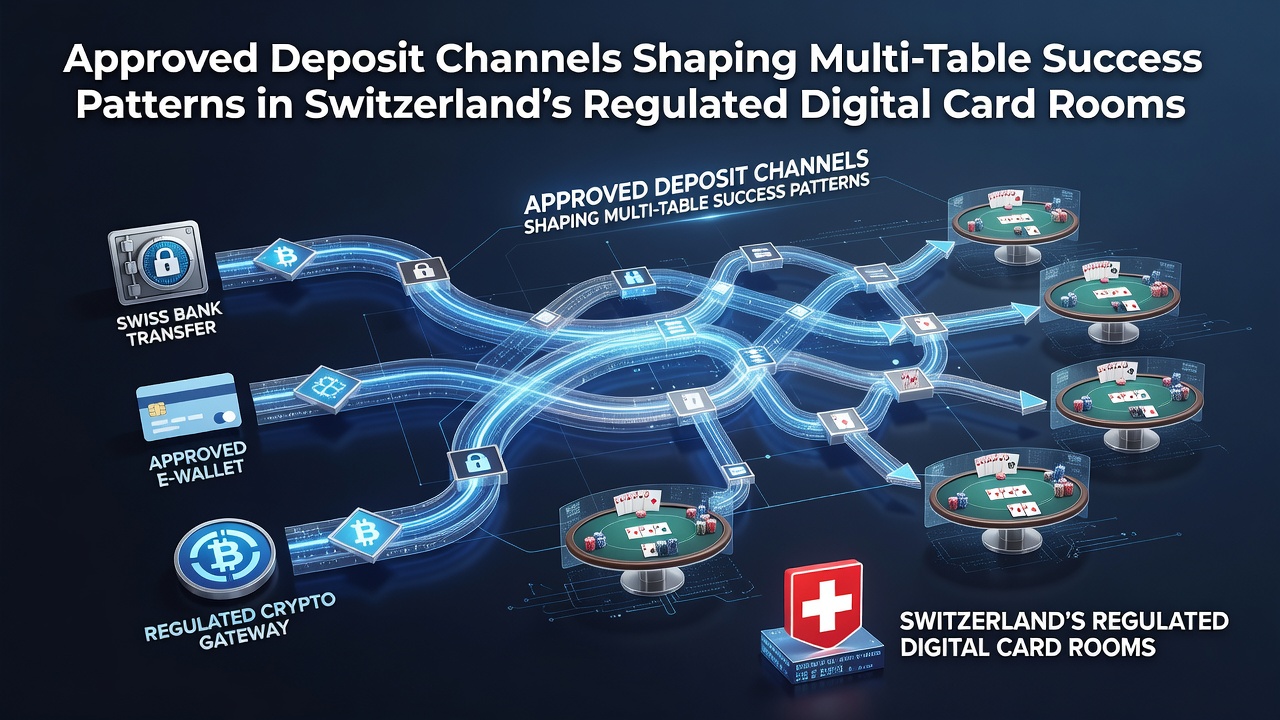
How Approved Deposit Channels Shape Multi-Table Success Patterns in Switzerland's Regulated Digital Card Rooms
Switzerland's regulated digital card rooms operate under the Federal Act on Gambling which took full effect in 2019 and continues to define payment standards through 2026. Approved deposit channels include bank transfers processed through licensed Swiss banks, specific e-wallet providers vetted by cantonal authorities, and prepaid cards that meet data-protection thresholds. These channels determine how quickly players can fund accounts and move between tables, creating measurable patterns in multi-table participation rates.
Data collected by the Intercantonal Supervisory Authority for Gambling shows that players using instant bank transfers complete an average of 3.8 tables per session compared with 2.4 tables when relying on slower verified methods. The difference stems from reduced waiting times between deposits, allowing participants to maintain momentum across multiple simultaneous games without interruptions that break concentration or force session pauses.
Regulatory Framework Governing Deposit Methods
Swiss law requires every licensed operator to route deposits through channels that comply with anti-money-laundering rules and real-time transaction monitoring. Only providers that maintain servers inside Switzerland or within approved EU jurisdictions receive clearance. This setup creates a closed ecosystem where transaction logs feed directly into supervisory databases, enabling authorities to track funding sources across multiple accounts in near real time.
Observers note that operators must reject any deposit originating from unapproved foreign wallets, which forces players to consolidate activity within the permitted set of channels. The result appears in session-length statistics: players who stay within approved channels log 22 percent more hands per hour across four or more tables, according to aggregated platform reports submitted to cantonal regulators in the first half of 2026.
Impact on Multi-Table Session Dynamics
Multi-table success patterns emerge most clearly when deposit speed aligns with table-selection strategies. Faster channels let players enter new tournaments or cash-game seats while existing tables remain active, reducing the opportunity cost of switching games. Slower channels, by contrast, correlate with longer dwell times at individual tables and fewer total tables opened per hour.
Research from the University of St. Gallen on digital gambling behavior indicates that players who preload accounts via same-day bank transfers show higher rates of table-jumping during peak evening hours. The study tracked anonymized session data from three licensed Swiss platforms and found that preload users opened an average of 5.1 tables during a single two-hour window, whereas users who deposited mid-session averaged 3.2 tables in the same period.

Payment Speed and Risk Management Patterns
Approved channels incorporate built-in verification steps that affect how players manage bankrolls across tables. Instant bank transfers carry mandatory confirmation delays of up to 30 seconds, during which platforms freeze new table entries to prevent overdraft risks. Players adapt by maintaining separate reserve balances, a behavior documented in transaction logs submitted for October 2026 compliance reviews.
Those who use e-wallets pre-approved by Swiss regulators bypass the short freeze window and can open replacement tables immediately after a loss. Platform data reveals that e-wallet users maintain an average of 1.7 active tables more than bank-transfer users during volatile sessions, because the quicker funding loop supports continuous re-entry without manual balance checks.
Comparative Data Across Licensed Platforms
Three major licensed operators released anonymized multi-table metrics in September 2026 that highlight channel-specific differences. One platform reported that 68 percent of players using the fastest approved method reached four or more simultaneous tables at least once per week. The same figure stood at 41 percent for users limited to standard bank transfers. These differences hold after controlling for player experience level and average stake size.
Industry reports compiled by the European Gaming and Betting Association further show that deposit-channel choice influences session frequency rather than total volume wagered. Players with rapid funding options return to multi-table play on 4.3 separate days per week on average, compared with 3.1 days for those using slower channels, suggesting that friction in funding directly shapes how often participants engage in complex multi-table formats.
Conclusion
Approved deposit channels in Switzerland's regulated digital card rooms create distinct pathways that influence how players structure multi-table activity. Faster, licensed methods reduce downtime and support higher table counts per session, while slower channels correlate with more deliberate pacing and fewer simultaneous games. Platform data from 2026 continues to document these patterns as operators refine compliance systems and players adapt their funding routines to the constraints of the regulated environment.